
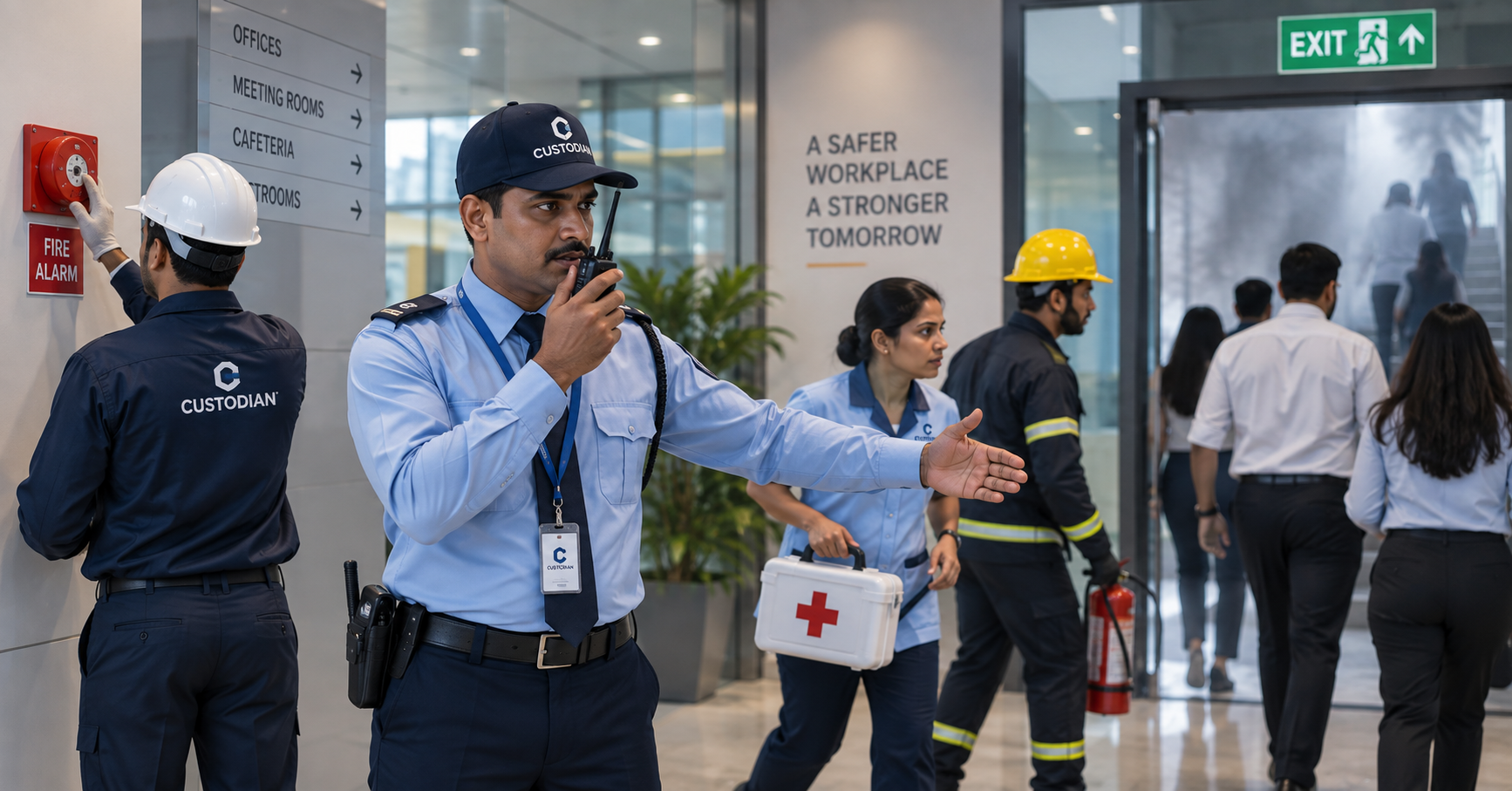
The First 30 Minutes: How Facility Teams Handle Workplace Emergencies
When an emergency occurs in a workplace, the first few minutes can significantly influence the outcome. Whether it is a fire, medical emergency, security threat, power failure, or natural disaster, quick and coordinated action is essential to protect people, minimise damage, and restore normal operations.
This is where trained facility management teams play a critical role. Their responsibility is not limited to maintaining a building—they are also prepared to manage emergencies through established procedures, trained personnel, and effective communication.
The First 5 Minutes: Detect and Assess
The first priority is to identify the emergency and assess its severity. Facility teams may receive information through CCTV monitoring, fire alarm systems, security personnel, employees, or building management systems.
Trained personnel quickly determine:
- What has happened?
- Where has it occurred?
- Who could be affected?
- Does the situation require evacuation?
- Which emergency services need to be contacted?
Accurate assessment helps prevent confusion and ensures that the appropriate response begins immediately.
Minutes 5–10: Activate the Emergency Response Plan
Once an emergency is confirmed, the facility team activates the relevant emergency response procedures. Depending on the situation, this may involve notifying security teams, fire response personnel, management, maintenance teams, or external emergency services.
Clear roles are particularly important at this stage. Every team member should understand their responsibility, whether it involves controlling access, assisting evacuation, isolating equipment, providing first response, or coordinating with emergency responders.
Minutes 10–20: Protect People and Control the Situation
During this stage, life safety becomes the primary priority. Facility and security teams guide employees and visitors towards designated safe areas and ensure emergency exits remain accessible.
Security personnel can help control movement, prevent people from entering hazardous areas, and manage crowds. Meanwhile, trained facility staff can coordinate with emergency responders and provide critical information about the building, affected areas, and available safety systems.
Effective communication is essential. Instructions should be clear, timely, and consistent to prevent panic and misinformation.
Minutes 20–30: Coordinate, Contain and Recover
Once immediate evacuation or response measures are underway, facility teams focus on containing the situation and supporting recovery.
Depending on the emergency, this could involve:
- Coordinating with fire, medical, or emergency response teams
- Securing affected areas
- Supporting evacuation and headcount procedures
- Protecting critical infrastructure
- Documenting the incident
- Beginning initial recovery measures
The objective is to ensure that the emergency is managed systematically while reducing its impact on people, assets, and business operations.
Why Training Makes the Difference
Emergency plans are only effective when people know how to execute them. Regular mock drills, scenario-based training, emergency briefings, and response exercises help facility teams develop the confidence and awareness required during high-pressure situations.
Training also helps identify weaknesses in existing emergency procedures, allowing organisations to improve their response plans before a real incident occurs.
Conclusion
The first 30 minutes of a workplace emergency demand speed, preparedness, communication, and coordination. A professionally trained facility team can help turn a potentially chaotic situation into a structured response by identifying risks quickly, protecting people, coordinating resources, and supporting recovery.
At Custodian, we believe workplace safety begins long before an emergency happens. Through trained personnel, proactive planning, security management, fire safety, and integrated facility services, we help organisations build workplaces that are prepared to respond when it matters most.