
Why Cleaning Schedules Should Be Based on Footfall and Usage
Maintaining a clean workplace is essential for employee well-being, hygiene, safety, and a positive visitor experience. However, effective commercial cleaning is not simply about cleaning every area at the same frequency. Different spaces experience different levels of footfall and usage, which means they also have different cleaning requirements.
A well-planned cleaning schedule considers how frequently an area is used, who uses it, and how quickly it becomes dirty. This approach helps facility teams maintain hygiene standards while using time, manpower, and cleaning resources more efficiently.
High-Footfall Areas Need More Frequent Cleaning
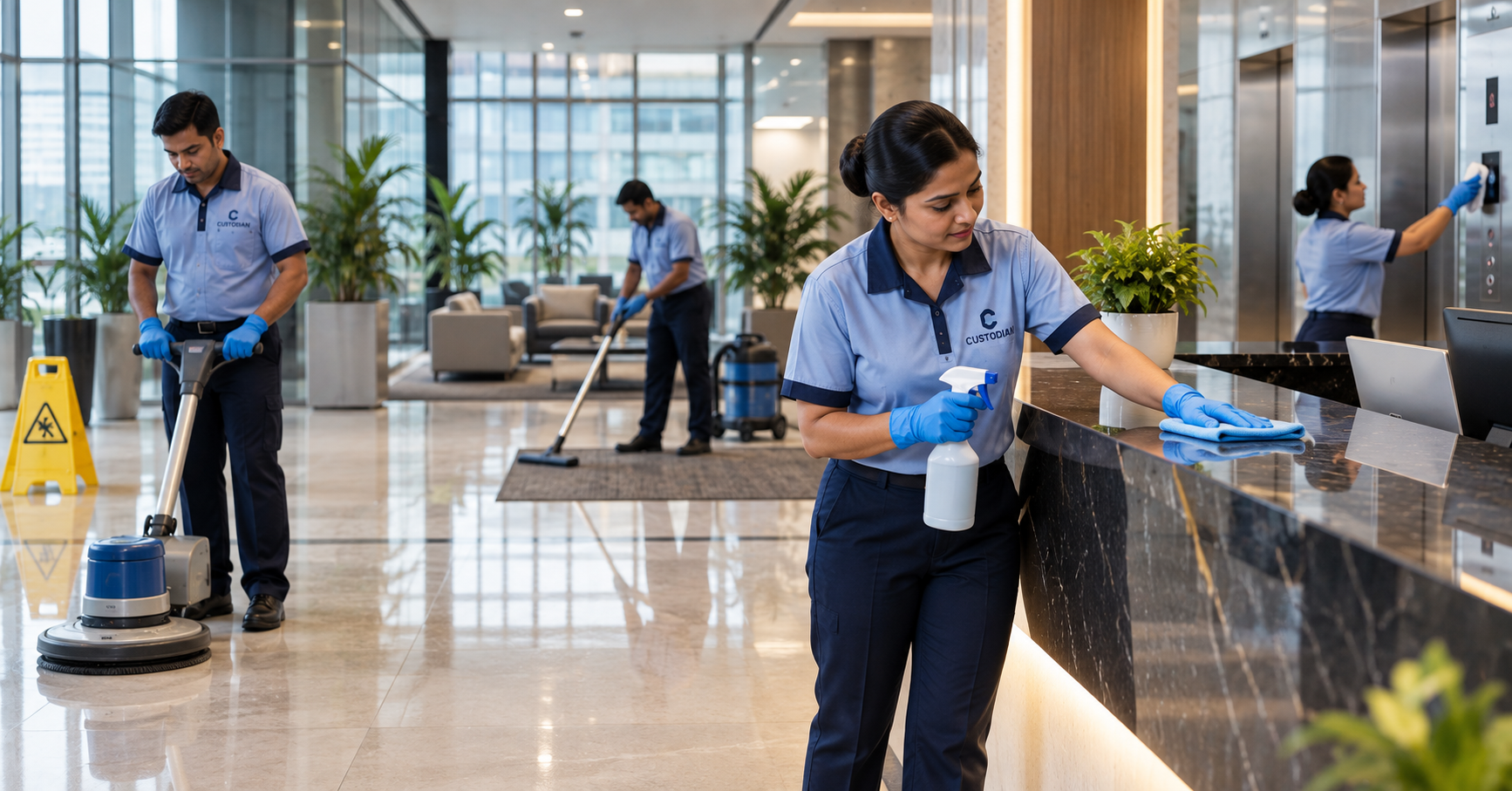
Reception areas, entrances, corridors, elevators, cafeterias, and washrooms experience significantly higher footfall than storage rooms or restricted office areas. As more people use these spaces, dust, dirt, germs, and waste can accumulate faster.
For such areas, cleaning may need to be performed several times throughout the day rather than following a fixed once-a-day schedule.
Regular attention to high-touch surfaces such as door handles, elevator buttons, handrails, and reception counters is particularly important in busy facilities.
Low-Usage Areas Require a Different Approach
Not every area needs the same cleaning frequency. Meeting rooms that are rarely used, storage areas, archives, and certain back-office spaces may not require the same level of attention as busy common areas.
Instead of applying identical schedules throughout a facility, housekeeping teams can adjust cleaning frequency based on actual usage. This allows resources to be directed where they are most needed.
Footfall-Based Cleaning Improves Workplace Hygiene
Cleaning based on usage patterns helps prevent dirt and waste from accumulating. In high-traffic areas, timely cleaning can also reduce unpleasant odours, improve appearance, and support better hygiene standards.
For workplaces with changing occupancy patterns, schedules can also be adjusted for different days, shifts, events, or peak working hours.
Better Use of Housekeeping Resources
A usage-based cleaning strategy helps facility managers allocate housekeeping personnel more effectively. Instead of spending equal time in every area, teams can prioritise spaces that require frequent attention.
This can improve productivity while reducing unnecessary consumption of water, cleaning chemicals, electricity, and other resources.
Data Can Make Cleaning More Efficient
Modern facility management can use occupancy data, visitor counts, feedback, inspection reports, and cleaning records to understand usage patterns. These insights can help teams identify areas that require more frequent cleaning and those that can follow a less intensive schedule.
Regular reviews also allow cleaning plans to change as workplace requirements evolve.
Conclusion
An effective commercial cleaning schedule should reflect how a facility is actually used. By considering footfall, occupancy, surface usage, and changing workplace patterns, facility teams can create cleaning plans that are more responsive, efficient, and practical.
At Custodian, professional housekeeping is approached as an essential part of overall facility management. With structured cleaning protocols and trained teams, businesses can maintain hygienic, safe, and well-managed workplaces while making better use of their resources.