
How Effective Visitor Management Strengthens Security in Commercial Buildings
Every day, commercial buildings welcome employees, clients, vendors, delivery personnel, contractors, and other visitors. While managing these visitors may seem like a routine administrative task, it plays an important role in maintaining workplace security. Without proper visitor management procedures, businesses may face risks such as unauthorized access, security breaches, and difficulties tracking who enters or exits their premises.
An effective visitor management system helps organizations maintain better control over their premises while ensuring a smooth and professional experience for guests. It combines structured entry procedures, identity verification, security personnel, and proper documentation to create a safer workplace.
Why Visitor Management Is Important for Workplace Security
Commercial buildings often experience high visitor movement throughout the day. Without a systematic process, it becomes difficult to monitor who is entering the facility and which areas they are authorized to access.
A structured visitor management process helps security teams verify visitor identities, record entry details, confirm the purpose of visits, and notify the concerned employees. These measures reduce the possibility of unauthorized individuals gaining access to restricted areas.
Essential Elements of an Effective Visitor Management Process
A reliable visitor management process involves more than maintaining an entry register. It requires a combination of security procedures and trained personnel.
Some important practices include:
* Identity Verification: Checking visitor identification before granting entry.
* Visitor Registration: Recording names, contact details, visit purpose, and entry time.
* Access Authorization: Confirming appointments with the concerned department or employee.
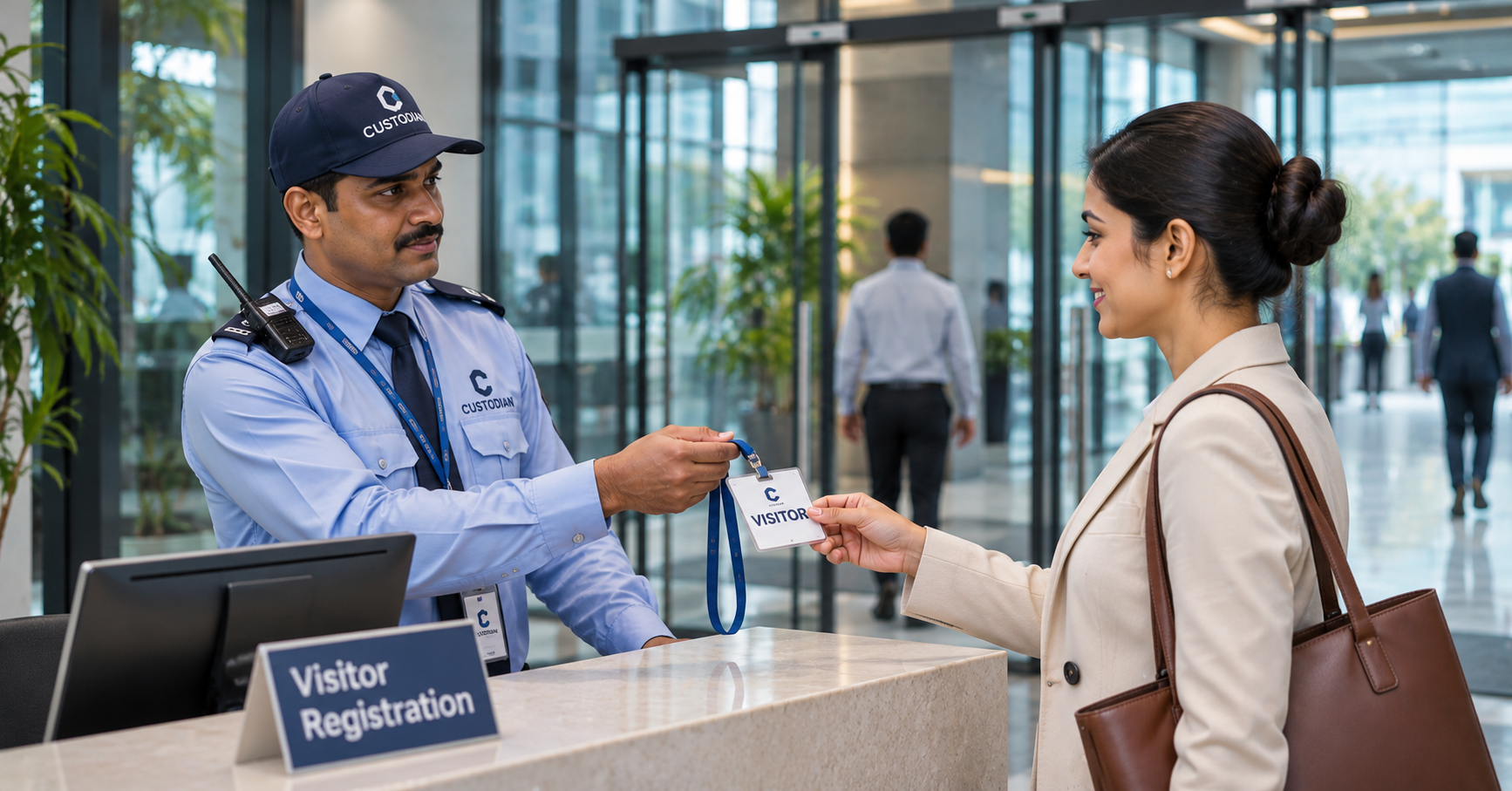
* Visitor Passes: Providing identification badges to distinguish visitors from employees.
* Entry and Exit Monitoring: Maintaining accurate records of visitor movement within the facility.
These procedures help establish accountability and improve overall access control.
The Role of Security Personnel in Visitor Management
Technology can simplify visitor registration, but trained security personnel remain essential for effective implementation. Security officers are responsible for verifying credentials, managing entry points, guiding visitors, and identifying unusual activities.
They also help manage peak-hour traffic, handle unexpected visitors, and coordinate with employees or facility managers whenever necessary.
Professional security personnel ensure that visitor management procedures are followed consistently without compromising the visitor experience.
Balancing Security with a Positive Visitor Experience
Security procedures should not make visitors feel uncomfortable or create unnecessary delays. A well-managed entry process should be organised, courteous, and efficient.
Clear instructions, professional communication, designated waiting areas, and timely assistance help create a positive first impression. This is particularly important for corporate offices, educational institutions, healthcare facilities, and other high-footfall environments.
Conclusion
Effective visitor management is an essential part of modern workplace security. By combining identity verification, access control, proper documentation, and trained security personnel, organizations can reduce security risks while ensuring smooth visitor movement.
At Custodian, we believe that workplace security begins at the point of entry. Through professional security management and trained personnel, we help businesses maintain controlled, secure, and well-managed premises where employees and visitors feel protected.